

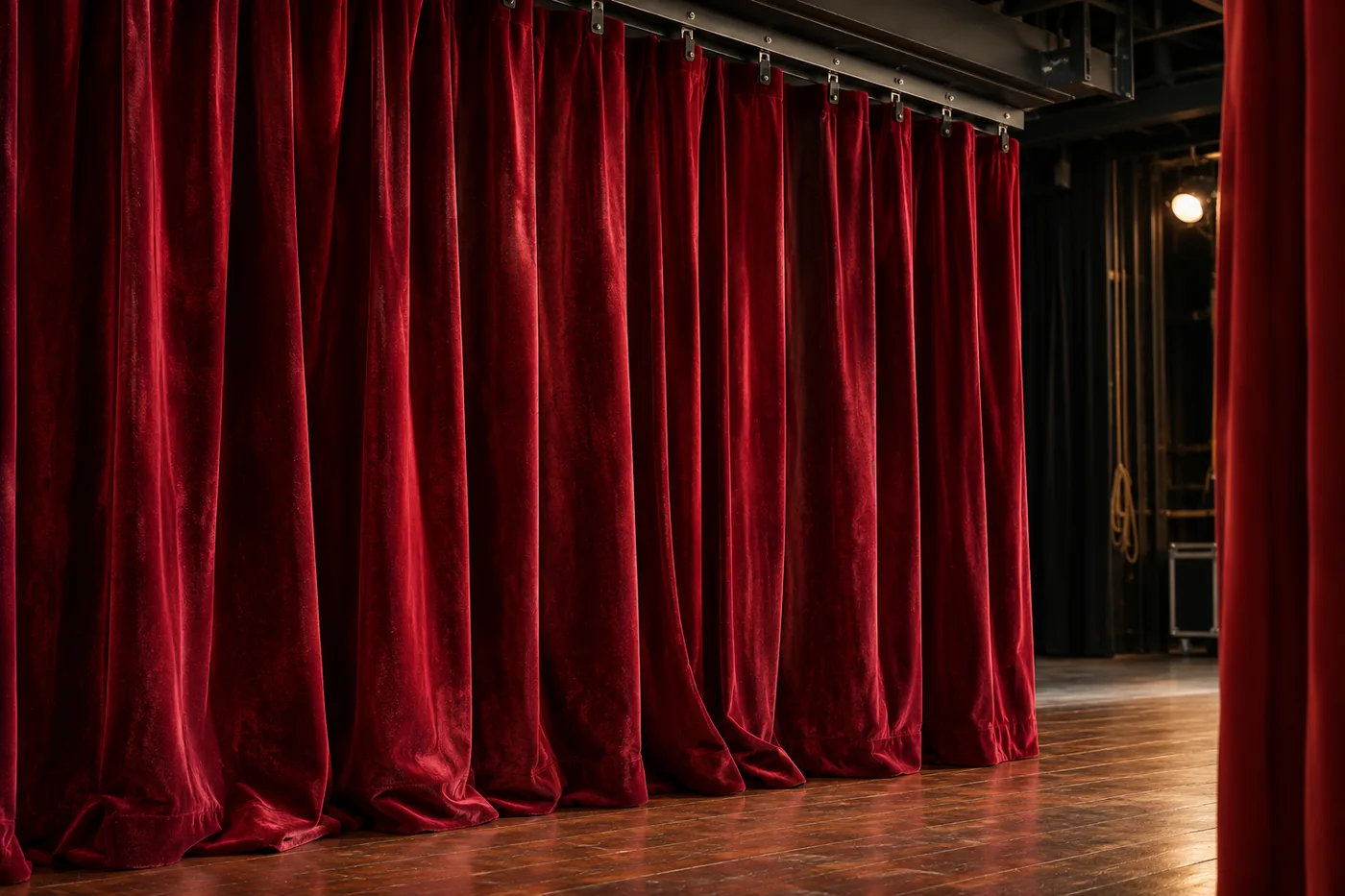
Main curtain, side masking and backdrop
Different stage textiles perform different jobs. The main curtain completes the composition seen by the audience, side masking helps conceal backstage movement, and the backdrop supports the production design. Start by identifying permanent elements and pieces that change between events. Review the stage from different audience positions. Side sightlines, performer entrances and equipment positions matter alongside the width of the opening, so include them in the initial layout before choosing the fabric and panel arrangement.
Movement and suspension system
Choose one-way opening, centre opening or another arrangement around the stage layout and operating programme. Curtain weight, stack-back space, track route and the control position need consideration together. Where existing equipment is retained, its specification and condition should be checked. A heavy stage curtain should not be planned as an ordinary domestic treatment. Manual or motorized operation depends on the particular system and should suit the technical team's working routine as well as the desired visual effect.
Light, colour and material samples
Compare the sample under the venue's stage lighting as well as in daylight. Colour, sheen, shadows within folds and light passing through a backdrop can all affect the production's appearance. A dense or velvet texture alone does not establish complete blackout or the required fire classification. Where the project specifies particular performance, check the selected material's documentation. Agree cutting direction, joins and visible seam positions before confirming the final arrangement and the manufacture of individual panels.
Event preparation and ongoing care
Send a general stage photograph, opening dimensions and a description of the events held in the venue. Include information about existing suspension, installation access and the preferred control arrangement. Plan for taking down, handling and storing the fabric as part of the project. Care must follow the selected textile's instructions because not all stage fabrics accept the same cleaning method. A clear specification agreed with the technical team supports event preparation and later maintenance or replacement of individual components.