

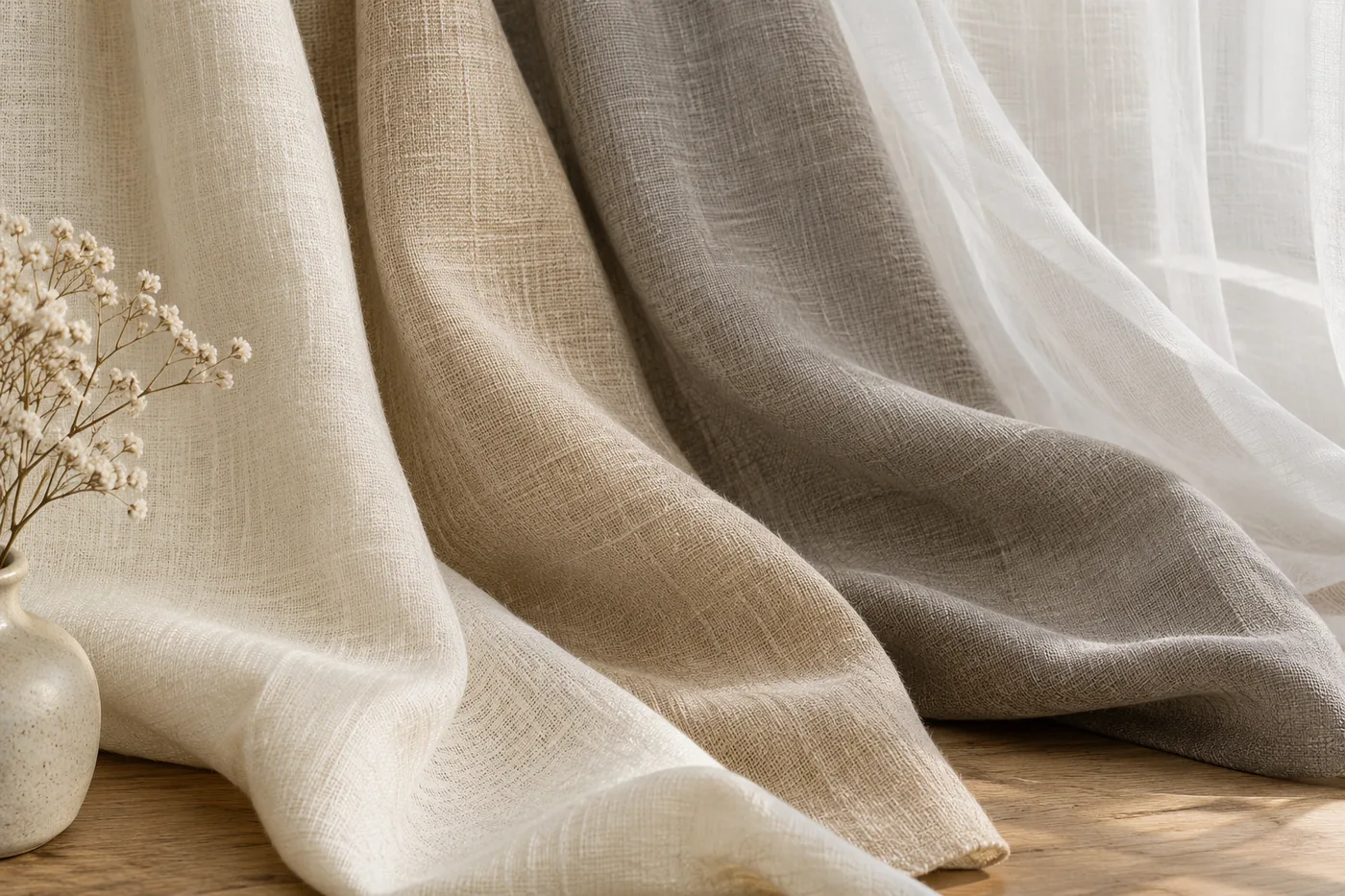
View an expressive surface in actual folds
If an Indian collection sample has a pattern, raised surface or embroidery, compare it flat and gathered. Some details are noticeable close up; others become stronger across an entire window. Check the main pattern colour beside the wall and furniture, then decide which feature should remain the room's focal point. Decorative appearance does not identify exact fibre composition; consult the sample information for that. Consider touch, surface under light and finished fold size together. This connects the attractive texture to the window's everyday appearance, rather than judging only one small section of fabric.
Connect lining decisions with colour and reverse appearance
When choosing lining for an expressive Indian fabric, consider more than its place on the reverse. Daylight, the structure of the face material and folded volume influence the perceived colour together. Layer the samples and compare them against the window and under room lighting. Consider whether the reverse will be seen from outside or an adjoining space. Agree how lining joins the fabric, where its lower edge finishes and how the materials' care requirements work together. Assess these decisions with the preferred texture rather than returning to them after selection, and record both sample references.
Plan motif placement across neighbouring panels
If the selected Indian fabric's design should continue across several panels, agree its starting position at the top and alignment between the two halves. A prominent motif's centre and the opening's centre do not always call for the same arrangement. Cutting layout becomes particularly important with a large repeat, so do not determine quantity from window width alone. Discuss fullness and how much pattern should remain visible when closed. For several openings, note whether a common pattern starting line is desired. Resolving these questions before cutting supports a coordinated design across neighbouring panels and windows.
Choose care arrangements for the decorative details
If the selected Indian sample includes embroidery, extra finishing or a raised texture, clarify care for that specific material. Ask whether face fabric and lining are cleaned in the same way and whether decorative components need removing. Curtain height, suspension method and frequency of use also affect practical choices. During the visit, discuss how each panel can be removed and rehung. Keep care guidance with the material reference. This helps match the decorative appearance you enjoy with everyday use and makes later cleaning decisions depend on the particular sample, rather than a general country-of-origin description.