

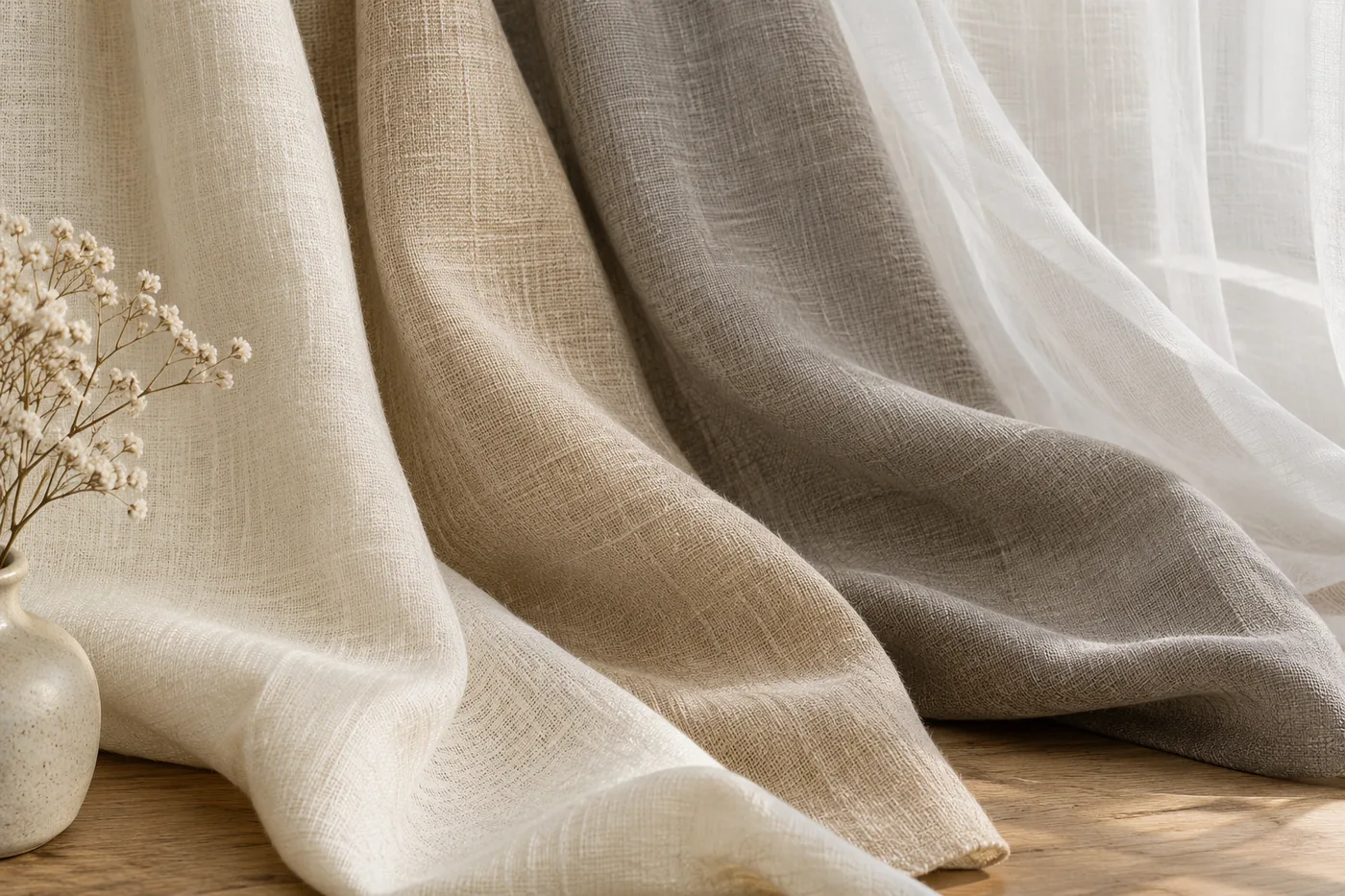
Compare texture with the room's existing materials
When choosing Italian curtains, consider the fabric surface beside the materials already in the room. A smooth weave, visible yarn and a slight sheen can look different against plaster, timber and upholstery. Do more than hold a small sample in your hand: position it vertically and form several folds. This makes its response to light easier to see. Comparing two textures in a similar shade may be more useful than seeking another colour. Base the decision on the intended room effect and the particulars of the selected sample, rather than its country name alone.
Decide what the fabric should emphasise
Establish where attention should go: towards the window, the furniture or artwork on the wall. If the selected Italian collection fabric has a large ornament, consider whether tiebacks and surrounding layers should be quieter. With a plain surface, the heading and shape of the folds may become more noticeable. Compare both gathered and closed positions. Agree the meeting edges of neighbouring panels, pattern direction and the relationship between finished length and floor. These decisions turn individual decorative details into a complete composition that retains its character when the curtains are used every day.
Address light control through the complete layering
Relate the appearance of your preferred Italian fabric to the room's light requirements. Soft daylight, evening privacy and stronger early-morning darkening are different tasks. Discuss sheers, lining and, where needed, a separate light-control layer alongside the face fabric. View the sample against the window and under room lighting, then decide how the layers should open. An interior photograph provides a visual reference, while the required light result depends on the chosen material's properties and installation conditions. Planning the complete layering helps retain the colour, texture and proportions that attracted you to the fabric.
Connect sample details to the finished specification
After choosing an Italian curtain fabric, keep its reference, colour option, composition and care instructions in one record. Ask about origin information for that particular collection as well. Connect the agreed heading, lining, panel count and track to the same material. Where several fabrics form one project, each should retain its own reference. This makes later changes and additional orders easier to discuss. Prepare photographs of the existing track and wall for the measurement visit, so the appearance and practical contents of the new treatment can be agreed together before sewing begins.