
Compare the colour in daylight and evening light
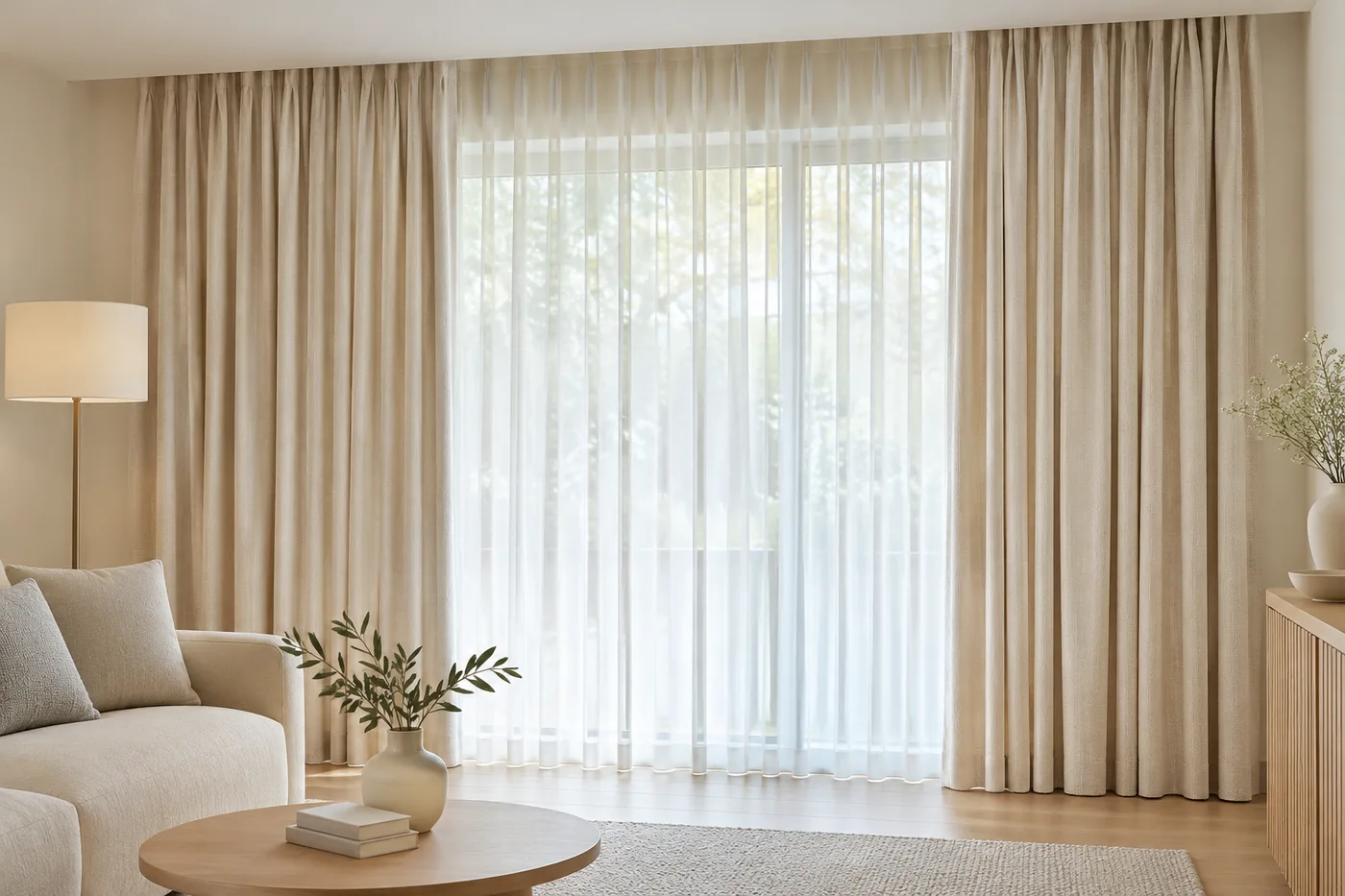
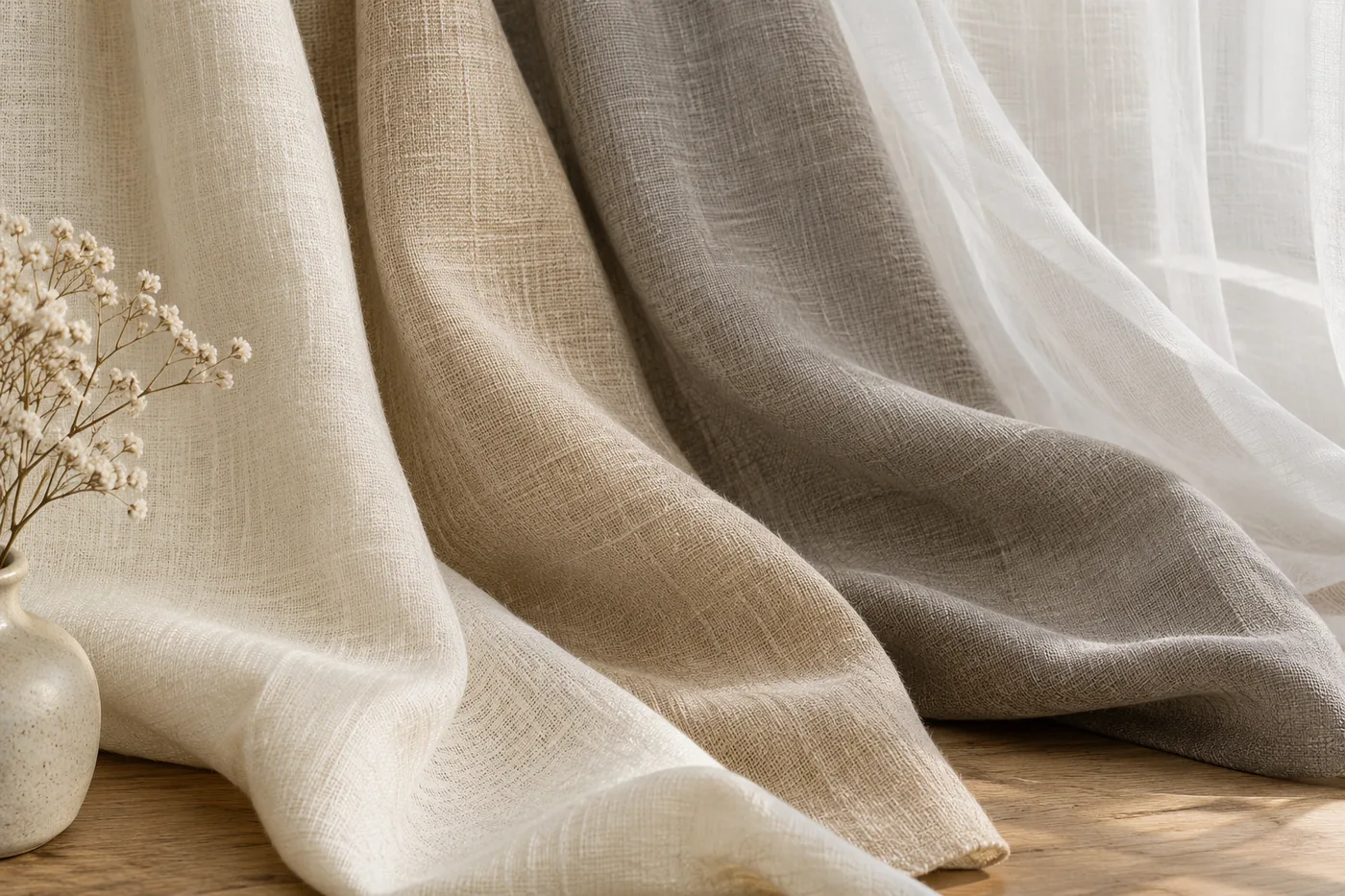
Do not choose a Spanish collection colour only under showroom lighting. Compare the sample beside the window and beneath the lamps used in the evening. Warm plaster, a white ceiling and dark timber provide different surroundings for the same fabric. Decide where else the chosen shade might appear, perhaps in a cushion, rug or small decorative object. Every surface need not match. The useful aim is to understand the curtain's role among existing colours and its appearance as light changes. Prepare a whole-room photograph rather than an isolated image of the opening.
Assess large patterns from a normal viewing distance
If a Spanish fabric has a graphic or botanical motif, consider the complete repeat rather than one small fragment. Think about how it will appear from the usual sofa or dining position. A detail that is clear close up can become an overall colour shape at a distance. Where wallpaper and rugs also have patterns, compare their scale and direction together. Indicate how tightly open panels should gather to see which part of the design will remain visible. Agree alignment between both halves and the side finishing before cutting, particularly across neighbouring windows.
Consider the drape together with the lining
Once the texture of a Spanish sample appeals to you, discuss how it should hang in finished folds. A light drape and a fuller treatment create different effects; the decision influences both heading and daily movement. Where lining is required, consider it with the face fabric, reverse appearance and care arrangements. A dense appearance alone does not establish a darkening level. Light-control requirements are checked against the selected layers and installation. The complete specification also helps establish whether the existing track can stay and what hardware is needed for comfortable opening.
Connect windows across an open-plan interior
If the living and dining areas connect, prepare photographs of every visible opening when selecting Spanish curtains. Identical fabric everywhere may not be necessary: one zone may suit sheers and drapes, while another needs a quieter option within the same palette. Compare top lines, lengths and opening directions as a coordinated plan. Panels should also gather comfortably beside furniture and leave circulation clear. Show how the adjoining area is seen from the first room. This approach helps choose related materials for the complete interior rather than a collection of disconnected window treatments.